
2026 College Football Strength of Schedule
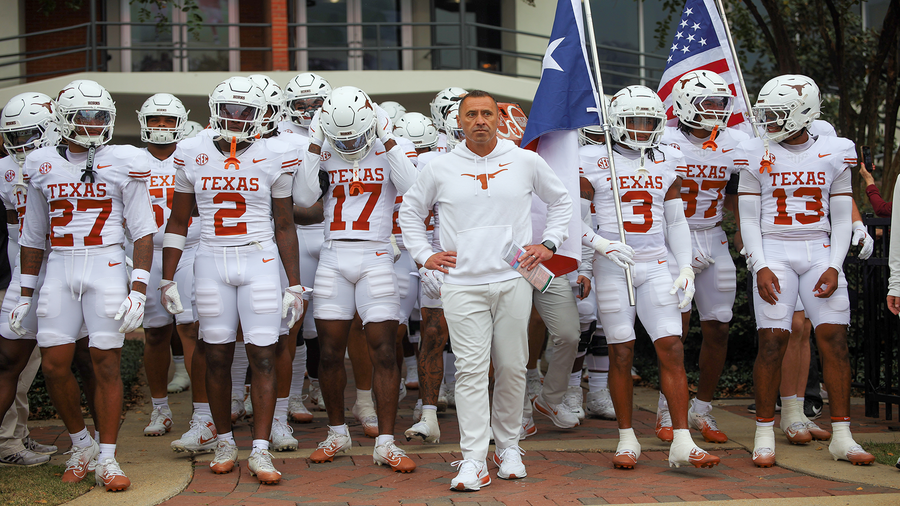
Not all 0-0 seasons are equal in college football.
On paper, every team enters the year with the same record, goals, and opportunity. But anyone who has followed the sport knows the reality is very different. Some programs face a season filled with top-10 opponents, hostile road environments, and conference schedules that feel like playoff games every week. Others have a much smoother path where momentum can build without constant pressure from elite competition.
That imbalance is exactly what makes college football unique, and what makes Strength of Schedule (SOS) so important.
SOS is one of the most telling indicators in the sport. It doesn't just measure how many games a team wins; it measures who those games are against. In a landscape where conferences vary dramatically in depth and difficulty, College Football schedule difficulty can completely reshape how we evaluate teams by season's end.
This year's 2026 Consensus SOS Rankings from Pigskingeeks evaluate all 136 FBS teams using a five-model consensus system, combining multiple rating approaches into one final, balanced ranking. Instead of relying on a single formula, the system averages five different rating methods to produce a more accurate national picture of schedule difficulty.
We used the final rankings from last year's results to determine the strength of teams.
What is Strength of Schedule (SOS)?
In simple terms, Strength of Schedule (SOS) measures how difficult a team's season is based on the quality of opponents they face.
It's not just about how many games a team wins, it's about who those wins (and losses) come against. Beating top-ranked teams week after week is a completely different challenge than facing lower-ranked or rebuilding programs.
This is why SOS has become such an important part of modern college football conversations, especially when discussing rankings, playoff contention, and team evaluations. The College Football Playoff committee doesn't just look at win-loss records anymore. They evaluate a team's full body of work, including FBS SOS Rankings, quality wins, and overall conference strength.
Why SOS matters in CFP rankings:
- Helps evaluate the true difficulty of a team's schedule
- Provides context beyond win-loss records
- Rewards teams that play stronger opponents
- Influences College Football Playoff selection decisions
- Helps compare teams across different conferences fairly
How Pigskingeeks Builds the 2026 SOS Rankings
Instead of relying on one rating system, Pigskingeeks combines five independent rating systems to create a single consensus ranking. Each model evaluates schedule difficulty using its own methodology, looking at factors such as projected opponent strength, conference competition, and overall schedule difficulty.
The Five Rating Methods Used Are:
- Powerwise: CFP Powerwise Explanation
- RPI: CFP RPI Explanation
- NPI: CFP NPI Explanation
- Safe3Step: CFP Safe3Step Explanation
- Power Ratings: CFP Laxpower Explanation
How the Consensus SOS Ranking Is Created:
5 Rating Systems
Evaluate Every Team's Schedule
Generate Individual SOS Rankings
Average All Five Rankings
Final 2026 Consensus SOS Rankings
By combining five respected rating systems, the final rankings become more balanced and consistent. This consensus approach helps smooth out outliers and reduces the chances of one model having too much influence on the final results.
2026 Overall SOS Landscape: A Conference-by-Conference Look
This year's FBS SOS Rankings tell a familiar story, but with a few notable developments.
The SEC once again leads the way when it comes to College Football schedule difficulty. With powerhouse programs like Texas, Georgia, Oklahoma, Alabama, LSU, Tennessee, Florida, and several others competing within the same conference, there's simply no easy stretch of games. Even teams in the middle of the SEC standings often face opponents capable of making a College Football Playoff run.
Right behind the SEC is the Big Ten, and the gap has never been smaller. Conference expansion has dramatically reshaped the landscape, with programs like USC, Oregon, Washington, and UCLA joining an already competitive league that features Michigan, Ohio State, Penn State, and Indiana. The result is a conference packed with marquee matchups from September through November.
The ACC continues to hold its place as one of college football's premier conferences, although it doesn't have the same overall depth as the SEC or Big Ten. Teams like North Carolina, Florida State, Clemson, Miami, Duke, and Louisville appear throughout the rankings, showing that the conference still features plenty of challenging schedules.
The Big 12 falls into the middle of the overall SOS landscape. Programs such as Arizona, Baylor, Utah, Kansas State, BYU, TCU, and Oklahoma State regularly face competitive conference schedules where almost every game can swing either way.
Outside the Power Four the Group of Five leagues, including the American Athletic Conference (AAC), Sun Belt, Conference USA (CUSA), and Mountain West, generally occupy the lower half of the rankings. This reflects the overall strength of their weekly schedules, which typically feature fewer nationally ranked opponents.
Conference Strength Snapshot (2026 Consensus SOS)
| Conference | Overall SOS Strength | General Trend |
|---|---|---|
| SEC | ***** | Toughest conference schedules |
| Big Ten | ***** | Very Close Behind SEC |
| ACC | **** | Strong top-tier programs |
| Big 12 | *** | Balanced, competitive schedule |
| American (AAC) | ** | Moderate schedule difficulty |
| Sun Belt | ** | Competitive but lighter overall |
| Conference USA | ** | Lower Average SOS |
| Mountain West | ** | Generally lighter schedules |
Top 10 Toughest Schedules in College Football (2026)
The top of the 2026 Consensus Strength of Schedule (SOS) Rankings is exactly where you'd expect to find college football's biggest heavyweights. These programs aren't just chasing conference championships; they're navigating some of the toughest schedules in the country.
One major trend stands out: the SEC and Big Ten account for every team in the Top 10.
| Rank | Team | Conference | Why their schedule is so tough |
|---|---|---|---|
| 1 | Texas | SEC | Faces one of the most demanding conference slates in the nation |
| 2 | Michigan | Big Ten | Stacked Big Ten schedule with multiple nationally ranked opponents |
| 3 | Ohio State | Big Ten | Annual rivalry games and several marquee conference matchups |
| 4 | Oklahoma | SEC | Ultra-competitive SEC schedule challenges the Sooners every week |
| 5 | Georgia | SEC | Even one of the nation's top programs faces elite opponents weekly |
| 6 | Michigan State | Big Ten | Difficult conference slate and challenging crossover games |
| 7 | Purdue | Big Ten | Consistently facing the conference's strongest teams |
| 8 | USC | Big Ten | Expanded Big Ten means regular matchups against traditional powers |
| 9 | Arkansas | SEC | Life in the SEC means facing championship-caliber opponents |
| 10 | Northwestern | Big Ten | Demanding conference schedule pushes into top 10 |
Top 25 Breakdown
Expanding the view to the Top 25 paints an even clearer picture of the 2026 landscape. The SEC and the Big Ten continue to dominate the upper tier, accounting for 21 of the 25 toughest schedules in the country, more than 84% of the entire Top 25.
Conference Distribution in the Top 25
| Conference | Team in Top 5 |
|---|---|
| SEC | 11 |
| Big Ten | 10 |
| ACC | 3 |
| Big 12 | 1 |
| Total | 25 |
SEC teams in Top 25: Texas (#1), Oklahoma (#4), Georgia (#5), Arkansas (#9), Florida (#12), Mississippi State (#13), Tennessee (#14), Kentucky (#17), Missouri (#20), Alabama (#21), LSU (#24)
Big10 teams in Top 25: Michigan (#2), Ohio State (#3), Michigan State (#6), Purdue (#7), USC (#8), Northwestern (#10), Washington (#15), Indiana (#16), UCLA (#18), Indiana (#22)
ACC teams in Top 25: North Carolina (#11), Stanford (#19), Duke (#25)
Big 12 teams in Top 25: Arizona (#23)
SEC Schedule Strength Analysis
The SEC continues to be the toughest conference in college football. The numbers speak for themselves: the SEC places 11 teams in the Top 25 of the 2026 Consensus SOS Rankings, more than any other conference.
Key SEC Teams in the 2026 SOS Rankings
| Team | SOS Rank |
|---|---|
| Texas | #1 |
| Oklahoma | #4 |
| Georgia | #5 |
| Arkansas | #9 |
| Florida | #12 |
| Mississippi State | #13 |
| Tennessee | #14 |
| Kentucky | #17 |
| Missouri | #20 |
| Alabama | #21 |
| LSU | #24 |
| Texas A&M | #26 |
| Vanderbilt | #27 |
| Ole Miss | #31 |
| Auburn | #33 |
| South Carolina | #37 |
No Easy Saturdays: Unlike conferences where a handful of teams dominate, the SEC is filled with programs capable of pulling off major wins on any given weekend. Rivalry games, road trips into some of the loudest stadiums in college football, and nationally televised matchups become a regular part of the season rather than occasional highlights.
Big10 Schedule Strength Analysis
For years, the conversation around the toughest conference in college football almost always started with the SEC. While that debate isn't going away, the Big Ten has made a compelling case that it belongs in the same conversation.
The addition of USC, Oregon, Washington, and UCLA has transformed the Big Ten into a true coast-to-coast powerhouse. The rankings reflect that reality: Michigan (#2), Ohio State (#3), Michigan State (#6), Purdue (#7), USC (#8), Northwestern (#10), Washington (#15), Indiana (#16), UCLA (#18), Indiana (#22), Penn State (#32), Oregon (#38), Iowa (#44), Illinois (#52), Maryland (#54), Wisconsin (#61), and Rutgers (#62) all appear in the upper half of the rankings.
Big Ten Competitiveness Breakdown
| Category | Big Ten Outlook |
|---|---|
| Elite national contenders | ***** |
| Depth across the Conference | ***** |
| Weekly Ranked Matchups | ***** |
| Overall schedule difficulty | ***** |
The Big Ten is closer to the SEC than ever before. The conference places 10 teams in the Top 25 toughest schedules, showing that its overall depth now rivals the SEC's in many ways.
ACC and Big 12 Analysis
ACC: Strong at the Top
The ACC remains home to several nationally recognized programs, reflected in the 2026 SOS rankings: North Carolina (#11), Stanford (#19), Duke (#25), Florida State (#34), Boston College (#35), Louisville (#40), Syracuse (#41), Wake Forest (#45), Virginia Tech (#47), Georgia Tech (#56), Clemson (#65), NC State (#66), Miami (#70), SMU (#72), Virginia (#74), and Pittsburgh (#78).
However, compared to the SEC and Big Ten, the ACC doesn't have the same level of depth across the entire conference.
Big 12: Balanced and Unpredictable
The Big 12 presents a different challenge: Arizona (#23), Cincinnati (#28), West Virginia (#29), Baylor (#36), Colorado (#43), Kansas State (#46), Oklahoma State (#48), Utah (#49), BYU (#50), TCU (#51), Arizona State (#53), Iowa State (#59), Kansas (#60), UCF (#64), Houston (#76), and Texas Tech (#82) are spread throughout the rankings.
One week, a team might look like a conference title contender. The next week, it could be upset by a program sitting in the middle of the standings. That unpredictability has become one of the Big 12's defining characteristics.
Group of Five Conference Breakdown
The Group of Five (G5) conferences may not dominate the top of the rankings, but they remain an important part of the FBS landscape. Many of these teams rank lower because their overall schedules typically don't include as many nationally ranked opponents or as much week-to-week depth as the Power Four conferences.
However, lower SOS rankings don't mean these conferences should be overlooked. Boise State (#112), Liberty (#104), and James Madison (#113) serve as reminders that while SOS is an important evaluation tool, it isn't the only measure of a program's quality.
What These SOS Rankings Mean for the College Football Playoff
When the selection committee evaluates teams, it looks beyond overall records. A team's resume includes several factors, such as the quality of its opponents, key victories, and how challenging its schedule has been.
For example, a team with a 10-2 record that consistently faced ranked opponents may be viewed more favorably than a team that finished 11-1 against a much weaker schedule. While wins are always important, who those wins came against often carries just as much weight.
This is one reason teams from the SEC and Big Ten frequently receive significant attention during playoff debates. Both conferences consistently rank among the toughest in the country, meaning their teams often earn quality wins simply because of the level of competition they face every week.
Key Takeaways
- The SEC once again leads the way with the most teams in the Top 25, continuing to set the standard for schedule difficulty.
- The Big Ten has closed the gap thanks to conference expansion, now every bit as competitive as the SEC at the top of the rankings.
- The ACC remains a strong contender with several programs capable of competing on the national stage.
- Texas owns the nation's toughest schedule, ranked No. 1 in the 2026 Consensus SOS Rankings.
- Strength of Schedule will continue to shape the College Football Playoff conversation, providing valuable context when comparing teams with similar records.
Final Thoughts
Every college football season begins with the same sense of optimism, but as the weeks unfold, one thing becomes clear, not every team travels the same road. Some programs face a relentless schedule filled with ranked opponents and championship contenders, while others have a more favorable path. That's exactly why Strength of Schedule (SOS) remains one of the most valuable tools for evaluating teams beyond their win-loss record.
The 2026 Consensus Strength of Schedule Rankings provide an early look at which programs are likely to face the biggest challenges this season. From the SEC's continued dominance to the Big Ten's rise as a true rival, the rankings highlight just how much conference strength can shape a team's journey toward the College Football Playoff.
Of course, rankings on paper don't determine what happens on the field. Every season brings surprises, breakout teams, and memorable upsets that make college football one of the most unpredictable sports. But understanding schedule difficulty gives fans, analysts, and even playoff discussions valuable context as the season unfolds.
As kickoff approaches, all 136 FBS teams will begin with the same record, but not the same road ahead.
At the highest level of the game, there are no easy roads, only different challenges waiting every Saturday.
Full 2026 Consensus Strength of Schedule (SOS) Rankings
SOS Ranking Tiers
| Tier | Ranking Range | Schedule Difficulty |
|---|---|---|
| Tier 1 | 1-25 | Elite schedule |
| Tier 2 | 26-60 | Strong schedule |
| Tier 3 | 61-100 | Mid-level schedule |
| Tier 4 | 101-136 | Lower schedule difficulty |
Top 25 Rankings
| Rank | Team | Conference |
|---|---|---|
| 1 | Texas | SEC |
| 2 | Michigan | B10 |
| 3 | Ohio State | B10 |
| 4 | Oklahoma | SEC |
| 5 | Georgia | SEC |
| 6 | Michigan State | B10 |
| 7 | Purdue | B10 |
| 8 | USC | B10 |
| 9 | Arkansas | SEC |
| 10 | Northernwestern | B10 |
| 11 | North Carolina | ACC |
| 12 | Florida | SEC |
| 13 | Mississippi State | SEC |
| 14 | Tennessee | SEC |
| 15 | Washington | B10 |
| 16 | Indiana | B10 |
| 17 | Kentucky | SEC |
| 18 | UCLa | B10 |
| 19 | Stanford | ACC |
| 20 | Missouri | SEC |
| 21 | Albama | SEC |
| 22 | Indiana | B10 |
| 23 | Arizona | B12 |
| 24 | LSU | SEC |
| 25 | Duke | ACC |